By William D. James, DO · Crystal Lake Health Centers, Benzonia 
November is National Diabetes Awareness Month, and it’s a good time to ask yourself a simple question: Do you know your blood sugar numbers?
If you’re not sure, you’re not alone. About 40 million people in the United States have diabetes, and more than 1 in 4 of them don’t know it yet. Another 115 million adults have prediabetes, and most of them don’t know it either. The good news is that a simple blood test can tell you where you stand, and finding out early gives us the most options.
Diabetes doesn’t always announce itself, and it doesn’t care how old you are or how good you feel. I’ve had patients who had no idea their blood sugar was high. Some were in their 20s and 30s and felt perfectly healthy. Others were in their 70s and had simply never been checked. Sometimes we found it on routine bloodwork drawn for something else. The good part is that once we know, we can do something about it, with simple changes, medication if needed and regular checkups to keep it under control.
Know your numbers
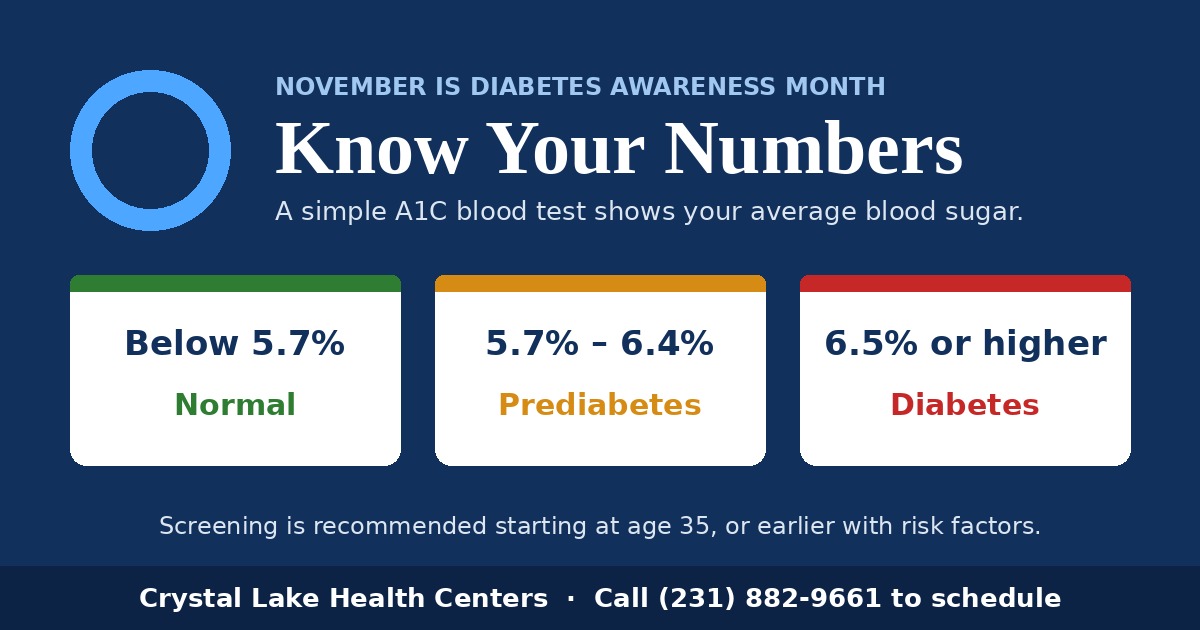
The test I rely on most is the A1C, which shows your average blood sugar over the past two to three months:
- Below 5.7%: normal
- 5.7% to 6.4%: prediabetes
- 6.5% or higher: diabetes
I’ll often check your fasting blood sugar, blood pressure and cholesterol too, since they work together to protect your heart, kidneys and eyes.
Who should get checked?
Screening is recommended for adults starting at age 35, and earlier if you have risk factors such as:
- A family history of diabetes
- Being overweight
- High blood pressure or high cholesterol
- Diabetes during a past pregnancy
- Not being physically active
Signs to watch for
Type 2 diabetes often has no symptoms at first. When signs do show up, they can include:
- Feeling very thirsty or urinating often
- Feeling tired
- Blurry vision
- Cuts or sores that heal slowly
- Tingling or numbness in the hands or feet
If you notice any of these, please don’t wait for your next checkup. Give us a call.
Prediabetes can often be turned around
If your numbers show prediabetes, that’s not a diagnosis to fear. It’s an early warning, and small changes can make a big difference: more movement, healthier eating and, if needed, modest weight loss can lower your risk of developing type 2 diabetes.
Let’s check together
At Crystal Lake Health Centers, we can test for, diagnose and treat diabetes, all close to home. If you already have diabetes, we’ll work with you on regular checkups, A1C monitoring, medications and a plan that fits your life. If you’re not sure where you stand, ask about checking your numbers at your next visit, including your annual physical or Medicare Annual Wellness Visit.
I see patients at our Benzonia clinic (6227 Frankfort Hwy), and our team at all 11 Crystal Lake Health Centers locations is here to help. Call your nearest clinic or (231) 882-9661 to schedule.
Take care,
William D. James, DO
Crystal Lake Health Centers, Benzonia
Find a location near you → · New patient information →
Sources: Centers for Disease Control and Prevention, National Diabetes Statistics Report; American Diabetes Association, Standards of Care in Diabetes; U.S. Preventive Services Task Force.